“Why toddlers are on a leash in Delhi”

From the Times of India today, national laws, such as the Contract Labour Act, the Building and Other Construction Workers Act and the Inter-State Migrants Act, have childcare provisions for women working in construction. Mobile Creches have been available on some large construction sites since 1969. However, many women work on small jobs that are not covered by the law and where there are no childcare options. Parents are left to tie their small children nearby to keep them safe.

http://timesofindia.indiatimes.com/city/delhi/Why-toddlers-are-on-a-leash-in-Delhi/articleshow/48979555.cms

Posted in children, construction, mobile creches, women | Leave a comment

Kudumbashree: Kerala’s all women’s construction company

This is a terrific video by the BBC on the Kudumbashree Construction Companies. “Kudumbashree” is the southern Indian state of Kerala’s mission to wipe out poverty through community action and the empowerment of women. The literal meaning of Kudumbashree is prosperity (shree) of the family (Kudumbam). You can see more on the government policies and projects at http://www.kudumbashree.org/?q=home.

The Archana Women’s Centre in Kottayam is one of the training centers for the Kudumbashree workers. I hope to be there for International Women’s Day 2016.

Posted in construction, Kudumbashree, training, women | Tagged | Leave a comment

India To Build Homes For All

“When it comes to the scene of construction activity in India, images of poor workers–both men and women on faded torn clothes carrying red bricks on their heads–dominate the catalogue. Although India has progressed a lot in its 68-year post independence history, this scene has remained pretty much the same. The fate of these poor construction workers remained unchanged, although they age by the day and often die poor when the next generation carries on with the modern-day slavery.

The Indian government is planning to build 500 new cities by 2022 and has opened up the construction sector to foreign investors.

What will happen to India’s women construction workers as the western multi-nationals who exclude women from trades work enter the Indian market?

See more at: http://www.businessweekme.com/Bloomberg/newsmid/190/newsid/957/India-To-Build-Homes-For-All#cnttop”

Posted in construction, women | 1 Comment

Building India’s cities, silent workforce of women goes unrecognized

This Jan 11, 2015 article by Nita Bhallo from Reuters describes the conditions of many of India’s women construction workers and the work of SEWA in training women and educating them on their rights.

http://www.reuters.com/article/2015/01/12/us-india-women-construction-idUSKBN0KL00920150112

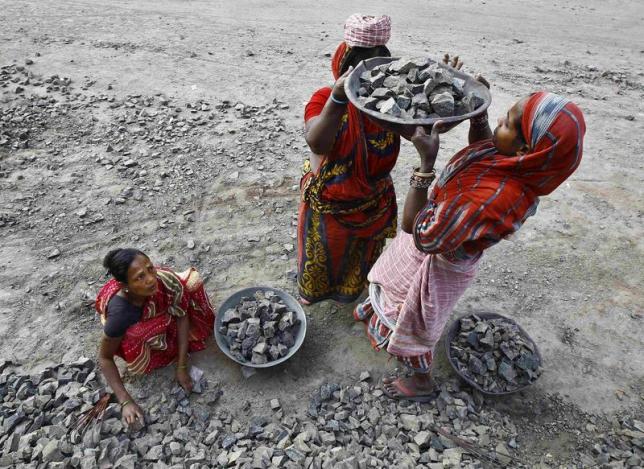
Women labourers work at the construction site of a road in Kolkata January 8, 2015. REUTERS/Rupak De Chowdhuri

Women labourers work at the construction site of a road in Kolkata January 8, 2015. REUTERS/Rupak De Chowdhuri

Posted in construction, headloads, women | Leave a comment

The Women in Hard Hats

I hope to visit the Archana Women’s Centre (AWC), near Kottayam in Kerala, when I am in India next year. The Centre is training women in the skilled construction trades. Here is an article from the Times of India on women masons– graduates of the AWC program– building a housing project in Edakkattuvayal.

http://timesofindia.indiatimes.com/india/The-women-in-hard-hats/articleshow/48220927.cms

Cementing a change: Trained as masons, electricians and plumbers, over 220 women in Kerala are busting stereotypes. (TOI photo by TK Deepaprasad)

Cementing a change: Trained as masons, electricians and plumbers, over 220 women in Kerala are busting stereotypes. (TOI photo by TK Deepaprasad)

Posted in Kudumbashree, training, women | Leave a comment

INTERNATIONAL CONFERENCE Rethinking Cities in the Global South: Urban Violence, Social Inequality and Spatial Justice

January 20 to 22, 2016 at the Tata institute of Social Sciences Mumbai

At a time when the global south is being reconstituted by the force of urbanization there is simultaneously hope and despair. Hope in that cities of the global south are our future – they present opportunities for economic growth, a better quality of life, provide multiple possibilities of being and becoming, and offer freedoms to express, participate and collectively decide these futures. And despair in that southern cities, with widely different histories and diverse development trajectories, are characterised by degrees of unevenness, spatial polarization, social inequality and debilitating poverty.

Both these positions are informed by theories, concepts, approaches and methodologies that have emerged predominantly from the global north. Given that the empirics of urbanization is shifting definitively to the global south, there is an urgent need therefore to stimulate comparative conversations, actively build knowledge and analysis, and consolidate empirical and theoretical studies about the urban. This requires a critical, grounded and southern perspective, by privileging conversations focused on southern narratives, experiences, and voices that challenge and engage with the existing scholarship on cities, exploring continuities as well as disjuncture with cities in the developed countries.

This conference seeks to include voices from the ground to better understand the aspirations, the strategies, the actions and the agency of communities and people in actively seeking to align with the urban transformation, or to influence the restructuring process, to seek strategic spaces to consolidate their tenuous claims to space, identity and livelihood, and the protests or violence they resort to in response to their exclusion from the body politic of the city in violent and repressive ways. In bringing divergent viewpoints and multiple voices situated across a range of cities in the global south, this international conference seeks to contribute to recent theorizations on the heterogeneous processes of urbanization and urban restructuring that have been emerging from urban scholars working in Latin America, Asia, and South Africa.

Posted in cities, Conferences, global south | Leave a comment

Construction Labourers Demonstrate for Unorganised Workers

According to The Hindu, “Eighty-three members, including 45 women, of the AITUC were arrested on Tuesday when they attempted to stage of road roko.” Among the demands were maternity benefits for women construction workers.

http://www.thehindu.com/news/national/tamil-nadu/labourers-stage-demonstration/article7449755.ece

Posted in construction workers, roko | Leave a comment

The beginning

In 1995, my friend and research partner, carpenter Liz Skidmore, came back from the UN Conference on Women in Beijing and told me an amazing story. In a workshop for tradeswomen that Liz and Connie Ashbrook (elevator constructor and Director of Oregon Tradeswomen, Inc) had organized, the women from western economies began the very familiar refrain of exclusion from good paying jobs in the construction trades. To their great surprise, women from developing economies said that they were well represented among workers in construction but that the jobs were lousy. Former electrician and now Professor Vivian Price was also there and she summarized this revelation as women in the global north are told we are not strong enough to do this work and women in the south are told we are not smart enough to do the skilled work. Liz has recently said that, wherever we are, women are told the story that will keep us in our place.

I have been doing research on women in the US construction industry for almost 25 years. For the past 20 years, I have been thinking about the global contradiction that was exposed by the tradeswomen in the Beijing workshop. I have been especially following the stories of women working in construction in India because the industry is huge and women make up as much as half of the workers. In 2014, I made the decision to apply for a Fulbright grant to go to India to see the other side of the problems of women working in the construction industry. My proposal to Fulbright, “Building bridges: A comparative study of women working in the construction industry in India and the US,” was accepted. I will be going to India on January 15, 2016. My plan is to travel around the country and meet with women workers, women’s and labor organizations and academics. I will learn so much and this blog is where I will share what I learn with a larger audience.

Welcome!

Posted in construction, Fulbright, women | 1 Comment