Delegate Reflections: Kristine Byers and Doreen Cannon Chat about TBB’s Hands-On Training In the Philippines

Reflections By Kristine Byers and Doreen Cannon

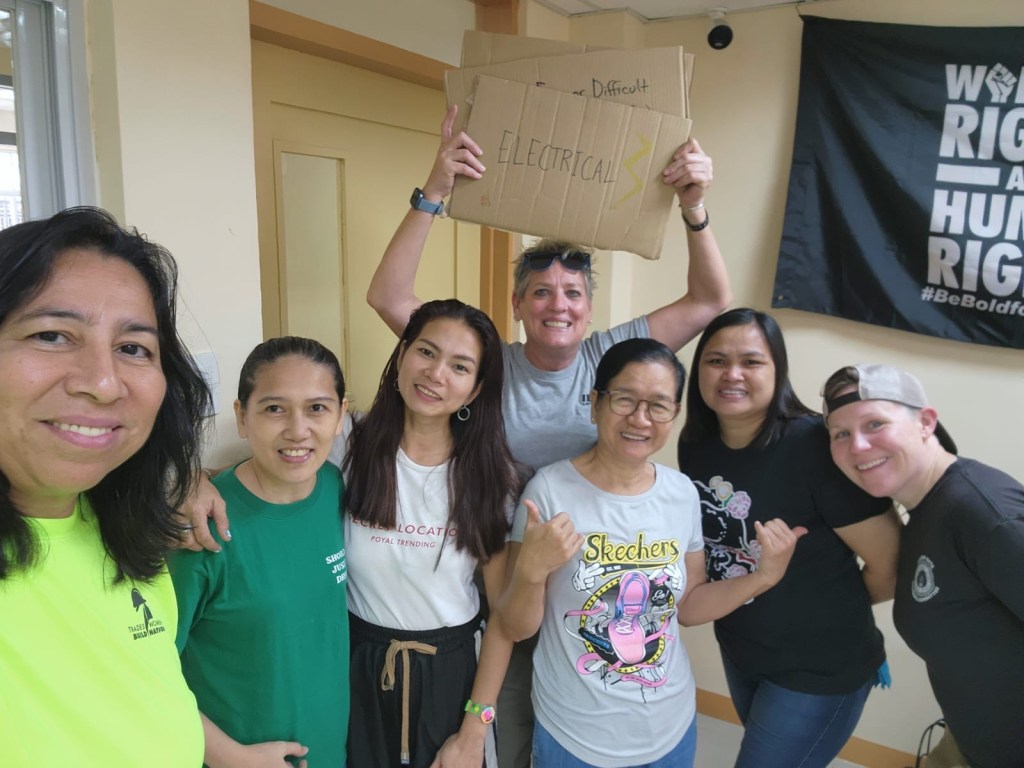
This year, Tradeswomen Building Bridges (TBB) embarked on a transformational journey to the Philippines, hosting hands-on skills training workshops in plumbing and carpentry. These sessions were designed to provide practical skills to Filipina women while fostering cross-cultural exchange and empowerment. For Kristine Byers, a Business Representative with the Carpenters’ Regional Council (CRC) in Edmonton, Canada, and Doreen Cannon of Plumbers Local 55 in Cleveland, USA, the experience was both challenging and deeply rewarding. As instructors and curriculum planners, they poured their time energy and attention into this project for months. Their reflections highlight the transformative power of collaboration, adaptability, and shared learning.
Adapting to Challenges


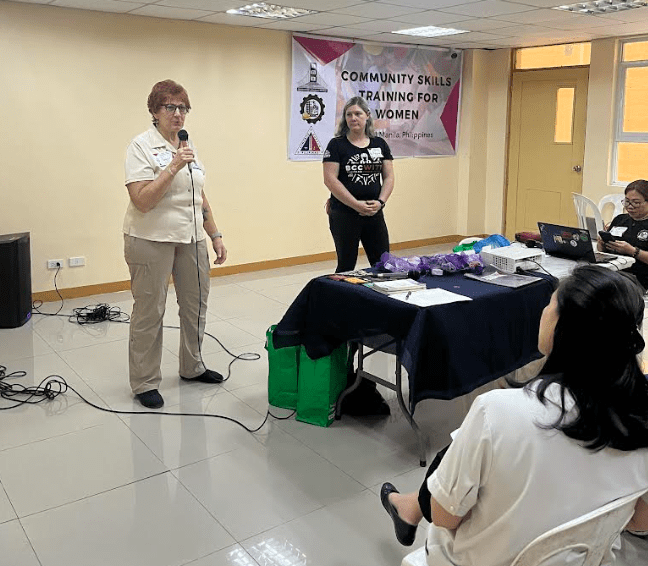
Kristine joined the delegation with enthusiasm, eager to bring hands-on carpentry training to life. However, the reality of acquiring tools and materials in a different setting proved more difficult than she anticipated. “When the right nails or screws weren’t available, we pivoted and modified the project,” she explained. This adaptability quickly became a cornerstone of the training, pushing Kristine to find creative solutions and rethink standard methods.

Similarly, Doreen faced hurdles planning the plumbing workshop. “Plumbing is very involved, and it’s difficult to come up with hands-on projects,” she reflected. But her team was determined to teach practical, everyday skills the participants could use in their homes. From mounting faucets to troubleshooting toilets, every project was designed to be accessible and empowering.
Empowering Through Skill-Building


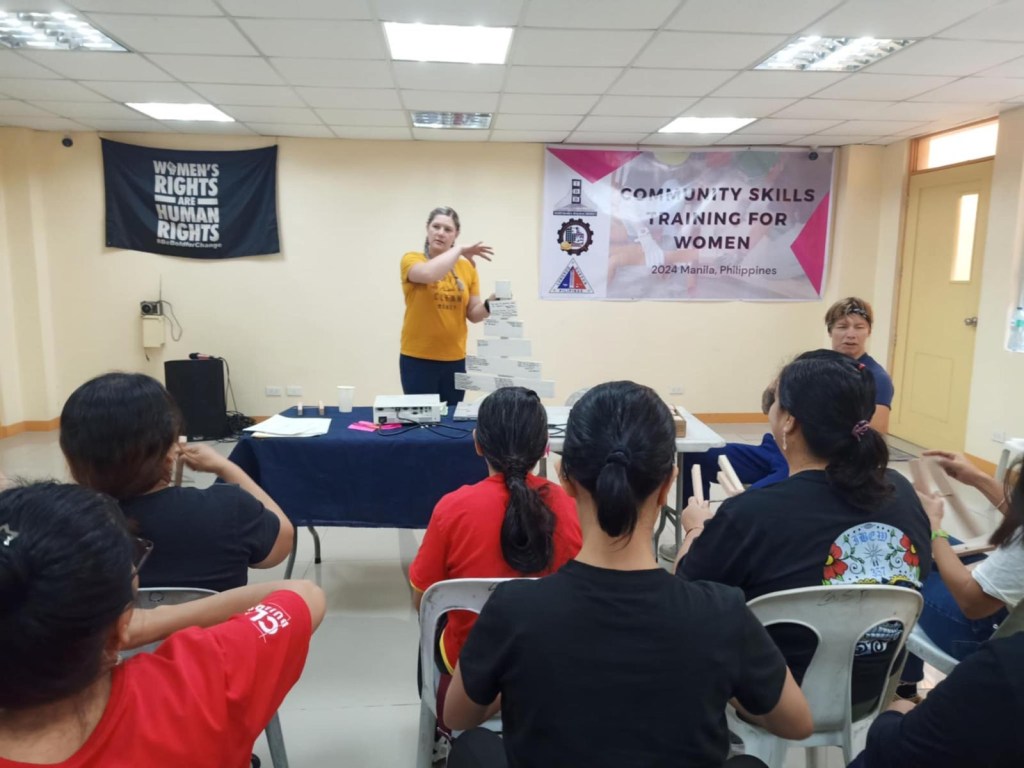
The enthusiasm of the Filipina participants left a lasting impression on both instructors. Kristine noted their eagerness to learn and how they quickly mastered new techniques, often stepping up to assist their peers. “Their motivation, engagement, and teamwork were truly inspiring,” she shared. Despite many meeting for the first time, they worked together seamlessly, creating a sense of unity and purpose.
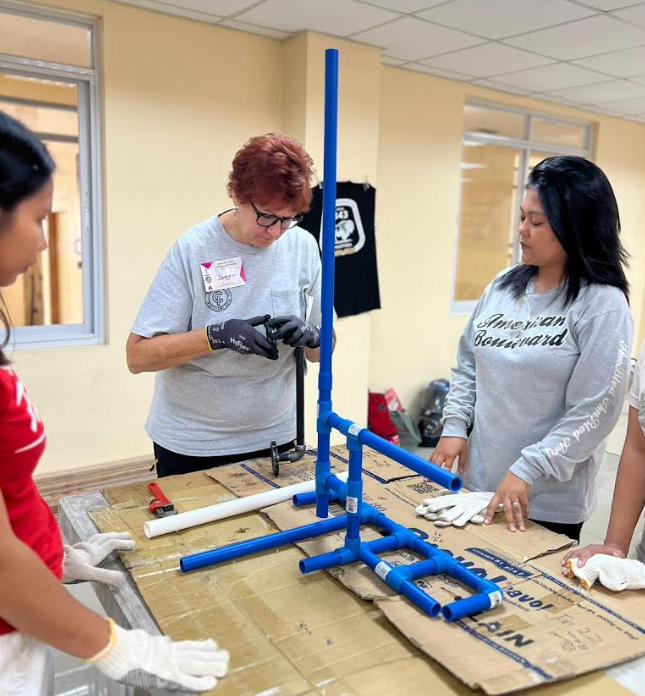
Doreen echoed these sentiments, describing their commitment as “contagious.” The participants took pride in every project, including a collaborative effort to craft a towel bar from steel pipe as part of the carpentry workshop. “These are issues they can now handle themselves when they arise in their homes,” she added, highlighting the real-life impact of the training.

A Transformative Experience for All


Both Kristine and Doreen were deeply moved by the emotional reflections shared during the wrap-up discussion. For many participants, the training was more than just skill-building—it was a path to empowerment. “They felt that the skills they learned could help them fix things at home, create products to sell, or even pursue a trade,” Kristine shared. From young women just starting out to senior participants eager to learn, each story underscored the importance of initiatives like TBB.
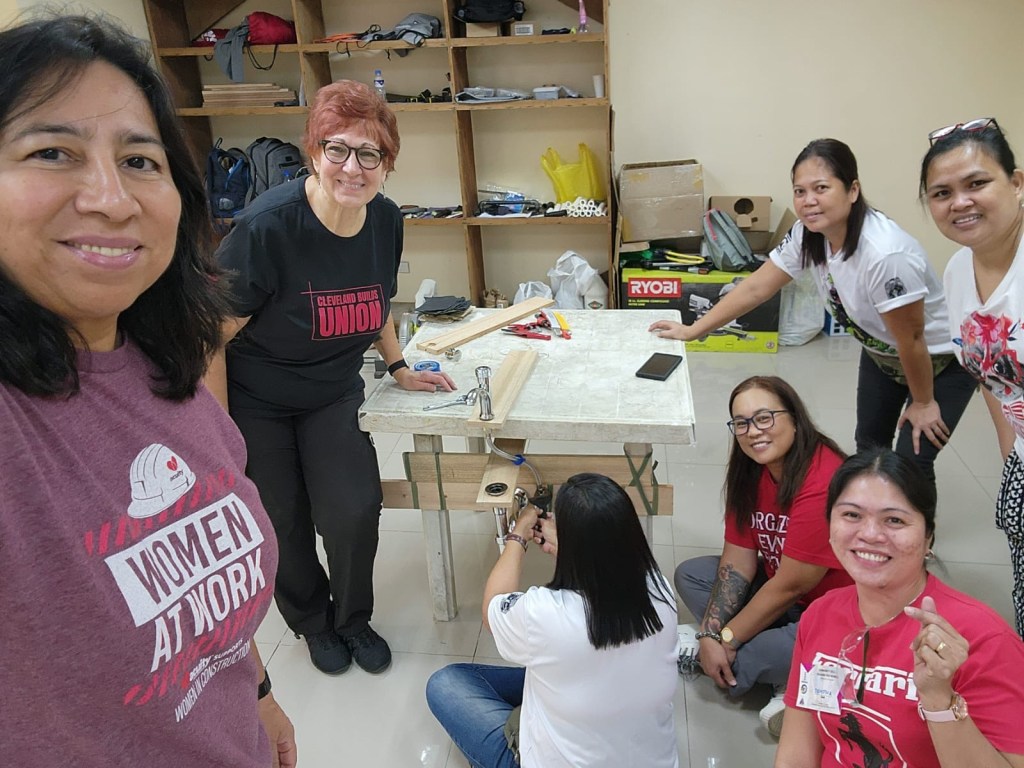
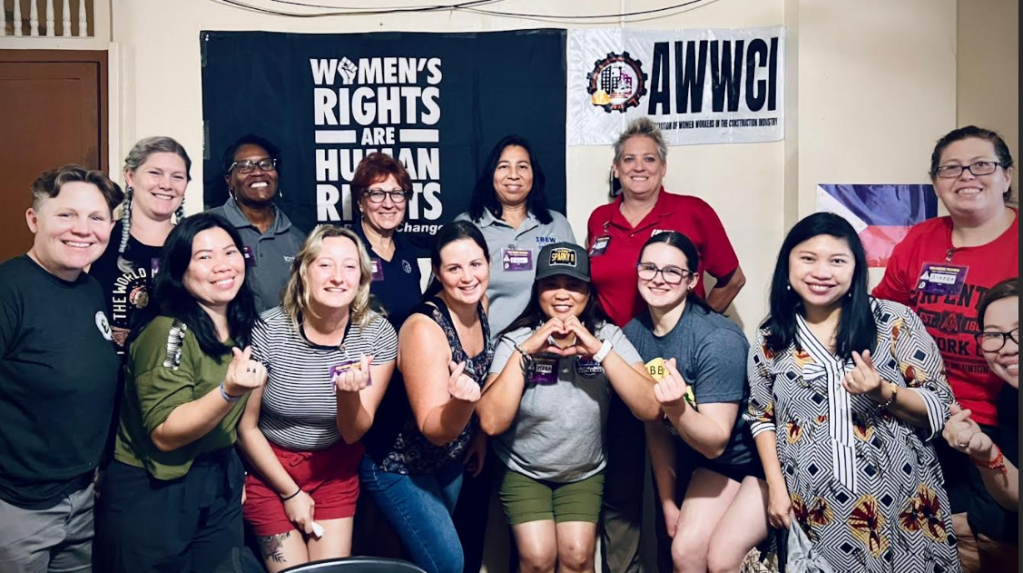
The experience also left a mark on the instructors themselves. Kristine found inspiration in the resilience and determination of the participants, as well as her fellow TBB delegates. “Their willingness to learn and contribute highlighted the power of collaboration and shared purpose,” she said. For Doreen, the opportunity to immerse herself in Philippine culture and history added a rich layer of meaning to the delegation. “This has been one of the best experiences of my life,” she reflected.

Looking Ahead


As Kristine and Doreen return home, they carry with them a renewed commitment to fostering opportunities for women in trades. “The momentum we’ve built here needs to continue,” Kristine emphasized. Both hope their reflections will inspire more tradeswomen to join future TBB delegations and experience firsthand the transformative power of building bridges across borders.

The TBB delegation’s efforts in the Philippines remind us all of the strength that comes from adaptability, collaboration, and shared purpose. In a world where opportunities for women in trades remain scarce in many places, initiatives like these pave the way for lasting change—one skill, one connection, and one empowered woman at a time.

Posted in Uncategorized | Tagged , , , , , , , | Leave a comment

Global Perspectives on Organizing: Lessons from the Philippines

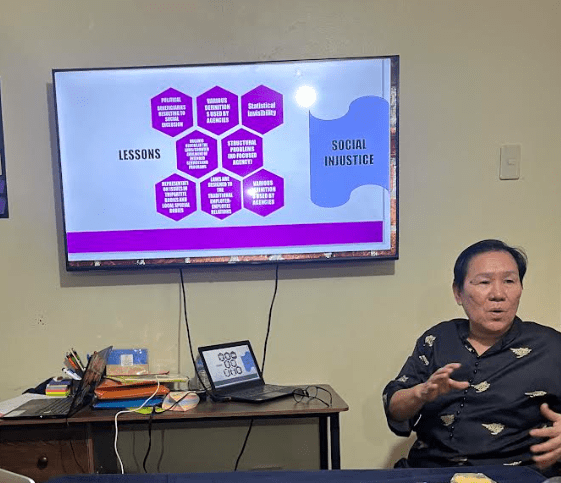
On Tuesday and Wednesday, our organizing training continued with a wide variety of esteemed presenters. Representing the Akbayan Citizens Action Party, we heard from General Secretary Odan Gutierrez. He gave us an overview of the political situation in the Philippines and the electoral organizing that his party does. He was followed by Khylla Meneses, the Akbayan Youth General Secretary. She taught us about young people in governance. The youth village council is a unique way to include youth in politics and support their advocacy.

Ninian Sumadia presented on sectoral organizing in the context of the National Anti-Poverty Commission and her role as youth sector representative. NAPC is under the office of the president and part of the government structure. It functions to coordinate poverty reduction programs by national and local governments. The heads of 13 different federal agencies are members as well as four presidents of local government leagues. There are spots on the commission for 14 basic sectors like artisanal fisherfolk, NGOs, people with disabilities, senior citizens and youth. Ninian was appointed by a former president for a 3 yr term and the next president made an extension. Basic sectors have at least 100 organizations that are part of a sectoral assembly and then they hold elections for representatives. NAPC provides a mechanism to effect change and advocate within the government structure and it has been a great start for poverty reduction and alleviation. It provides a platform for policy advocacy, political participation, mobilization, education, capacity building, initiating partnerships, projects and initiatives and media presence. 

Josephine Parilla spoke to us on behalf of HOMENET international.  She was their first international president. They  organize women in informal employment and have members in 71 affiliates across countries. Informal employment is rising in the Philippines. These workers often face invisibility in statistics and lack of representation, lack of access to social services and lack of workplace protections. HOMENET has a role in organizing around health and safety in workplace, discrimination and harassment and unsafe conditions.

Our last guest was Abraham Reyes, a Project Coordinator for TGSL IndustriALL Solidarity Center Project. He reminded us about the importance of organizing and guided us on best practices for bringing new union members into our movement. He also gave us an overview of the organizing landscape in the Philippines.

The information provided by our guests  is particularly useful for us as North American union leaders in the construction industry because it provides valuable insights into innovative organizing strategies and structures that can be adapted to their own contexts. For instance, the involvement of youth in governance through mechanisms like the youth village council demonstrates how to engage younger generations in leadership and advocacy, ensuring the sustainability of union movements. The example of the National Anti-Poverty Commission showcases a model for structured representation and collaboration between basic sectors and government, which could inspire similar initiatives to strengthen labor voices in policymaking. HOMENET International’s approach to organizing informal workers highlights the importance of addressing the needs of underrepresented groups, such as subcontracted or precarious workers in construction, while emphasizing health, safety, and equity. Finally, Abraham Reyes’ emphasis on organizing best practices offers actionable strategies for growing membership and building solidarity, which are critical for sustaining and expanding union power in any industry. We are extremely grateful to all of those who took time out of their day to contribute to our delegation. Tradeswomen Building Bridges values information exchange and solidarity building between countries.

Posted in Uncategorized | Tagged , , , , | 1 Comment

Delegate Reflections: TBB TRAINING MY MOST MEMORABLE EXPERIENCE

By Juvy Carmenotes

Hello, my name is Ms. Juvy Carmenotes, I am an Arc welder in the Philippines. I love doing DIY stuff at home. Not only welding, but also some basic work like carpentry, electrical, plumbing and painting. Sometimes even masonry. I really do love man’s work; I felt like it’s my passion and what I want to do in my life. But I’m not good enough to do those kinds of works so I need more training. 

One day my Partner Dave and I are planning to have our own Training Center for my fellow women. I would like to empower them and give them some hope that we are not just women! We are women! Everyone deserves to have a better life, not only for ourselves but also for our family. I would love to share my thoughts and knowledge with them. Especially those who are being abused.

We already made some plans for our future training center but the BIG question was how can I make it possible? Who, Where and Why?  So, then that’s how Tradeswomen Building Bridges came to my life. My partner did some research about women’s construction in the Philippines, and he found TBBs site. It was perfect timing that they were coming to visit the Philippines in order to empower women and share their unique skills.  I messaged the TBB facebook page and got an answer from them. They connected me to AWWCI who organized the event to make it happen. 

First, I would like to thank the AWWCI organization for letting me join the 5 days training with TBB delegates. I live 4 hours away from Manila and they even gave me a free accommodation. Thanks to Ms. Jane Vargas and Ms. Mheanne  Vargas. Thank you so much for your advocacy and for letting us know about women’s rights.

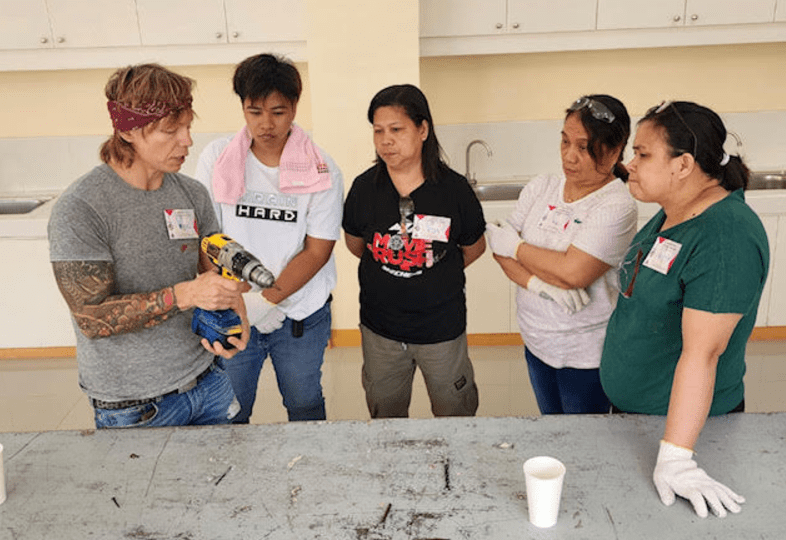
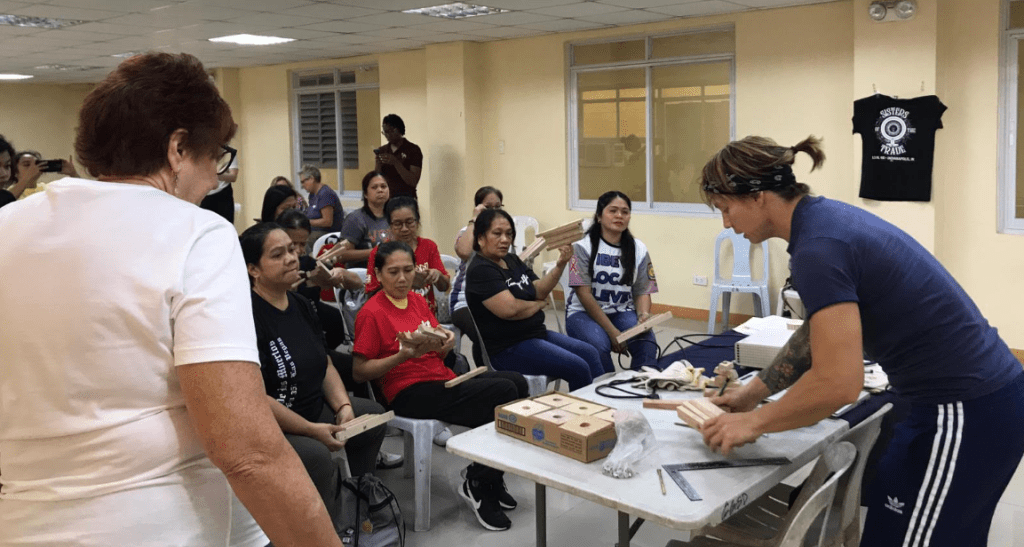
Big thanks to those TBB trainer Ms. Kristine Byers for teaching us, how to build our own shelves with a towel rack. Now I fully understand how to do proper measuring, which is my number one concern, because I am really not good at it. With a wrong measurement everything else goes wrong. I learned proper wood cutting using a saw and some electric tools with safety precautions. She made sure everyone was wearing their PPE, and made sure that everyone fully understood the importance of work ethic. Thank you for sharing some techniques to make our job easier and faster with good quality.  Now I am more confident to continue my pending carpentry work at home.

Big thanks as well to our plumber instructor Ms. Doreen Cannon, your passion in training also amazed me, its like Wow! I can’t even imagine that a woman plumber really exists, because I am only familiar with a woman welder, electricians etc. haven’t met someone like you. I am so glad to be your student. It is really a big shot for me to be trained by an international trainer. Sometimes I felt overwhelmed as everyone noticed lol! Thank you so much for sharing your knowledge with us. I’ve learned a lot from you in a very short period of time. I have learned how to join the pipes together and make sure they are even so the water can run properly.  I have learned that some water pipes must be elevated properly with a proper measure of heights. Thanks for sharing the techniques on how to level those pipes together. It is really a big help for me and for the other students. Now I understand why the pipes clog and I understand how the toilet flush functions. I can fix it in case there is a minor problem.  Basic knowledge in plumbing is a big help for me. It will help me to save my pennies. I don’t need to spend on a plumber for the basic problems. I wish we could do more training in the future so we can learn more about plumbing. Honestly, for me it is a more complicated job and I need more time to learn more.

Thank you both for your long patience and putting your heart in it. Your hard work is much appreciated. 

Of course, big thanks to the rest of the delegates, Noreen Buckley, Angel Anderson, Lori Griffith, Myra Hildreth, Amanda Kay Johnson, Cassandra Klewicki, Casey Aelbers, Diana Limon, Rachel Cloutier and Ms. Tanya. Without you guys our training would be more complicated. Thank you so much for your guidance and assistance. You worked with every one of us to make our projects possible and made sure it was a quality output. Assisting us one by one is not easy but you put your heart and effort into it and made sure we all could understand what we were doing. Every one of you has a different spice lol!  All of you were so very kind and good human beings Thank you all for the laughter and tears that we shared in a week. 

I feel like we’ve known each other for a very long time, especially my fellow students. I am so grateful to know you all. I did not know anyone when I joined the training but it was very easy for all of us to become a family. Laughter’s and bonding together is priceless. Spending and enjoying time together was great, it took away all our worries in life. Helping each other whilst on the training is a great example of a strong woman power! You are not just friends for me but also my new family. I felt at home and I never felt homesick because everyone was so kind and a true person. Our happy memories will remain forever, and I am looking forward to more and seeing  you again in the near future. I would love to be part of your mission again. 

Again, thank you all for the successful training and for sharing your specialty with us!

Love you all and see you all again next year. Have a safe journey back home!! 

Posted in Uncategorized | Tagged , , , , , , , | Leave a comment

Delegate Reflections: Supporting Filipino Tradeswomen in the Fight for Equality in Construction

By Angel Anderson

As week one of the Tradeswomen Building Bridges delegation draws to a close, I am reflecting on how grateful I am. I have had the opportunity to work with my delegate colleagues, allied organizations, and the Filipino sisters. I’ve learned so much about the barriers Filipino women face when attempting to enter and maintain employment and training opportunities in the construction workforce.

I learned that the average construction worker wage in the Philippines is no higher than that of an average worker in an unskilled work role. From what I understand, it’s significantly lower than that of a worker in a call center.

Construction is one of the most booming industries in the Philippines right now. There is space for new workers to enter, but women still hold less than 2% of that space.

From my understanding (after speaking with participants and event organizers from AWWCI) this may be partially to do with fear of not being accepted and/or taken seriously by (primarily) male employers, companies, and counterparts who are responsible for assuring the employment and safety of women in these work spaces.

For myself, being a unionized female worker in Canada I already know that I will never have to face this type of discrimination alone. Our unions have the strength and power to act on our behalf. The union fights for our rights whenever we face the same adversities that Filipino women face. The Filipina women stand together, but they have much less institutional support. We all know what it’s like to work in a culture that does not accept us working in traditionally male dominated fields.

This week I had the privilege to witness the level of dedication, commitment, and courage that all of the women who participated in our carpentry and plumbing training demonstrated. Many of them took time off of work, left their families, and traveled great distances for the opportunity to grow and learn with us. They knew that this would be a very limited, and maybe “once in a lifetime” training opportunity for them.

I think as a Canadian woman I take for granted that I have these training opportunities available to me regularly. I have secure employment as a female worker, and also protection against discrimination from my union, employers, and colleagues at all times.

The women out here have much less, if any of that. To create lasting changes that will help them to move forward in construction, it’s my belief that the AWWCI cannot do it alone. In my opinion we need to see more North American organizations, employers, and companies take a stand and use their power and influence in the industry to advocate for women’s rights here. We need to support more programs for women in the Philippines.

In Canada our rights have already been established, and it is my hope that any organizer, employer, and worker who reads this takes the time to consider what we have available to us currently, and what we have to offer. We need to help these hard working tradeswomen find the strength to break through the barriers that they face, and get to where they deserve to be.

My biggest take away from this delegation so far has been that tradeswomen in the Philippines are not fighting for anything less than to have equal rights and to be accepted in an industry that they are passionate about. They are painters, carpenters, electricians, etc, and all they want is the right to offer skilled work, and to provide much needed services in their communities. In my opinion they deserve that right and with more support from powerful North American construction organizations I believe that this is possible.

Posted in Uncategorized | Tagged , , , , | Leave a comment

Building Global Solidarity: Lessons from Day 1 of Organizing Training in the Philippines

This week, our delegates are receiving organizing training put on by AWWCI and their partners. Our first day was full of valuable information and networking. We started off with welcome addresses from Jane and Meann Vargas of AWWCI. Delegate Diana Limon from IBEW Local 11 spoke on behalf of our organization about the importance of organizing.

Then we heard from Attny. Ernesto Arellano, the current president of the National Union of Building and Construction Workers, a Philippine affiliate of BWI and the first labor organization in the country that was registered under the category of an industry union. He gave us an overview of the labor force in his country. In the Philippines, about 10%-12% of the entire labor force is organized into unions. Construction makes up about 12% of the labor force. He went over the large unions in the Philippines and the collective bargaining laws that dictate organizing on a national level. 

Next Cathy Gayo spoke to us about effective leadership strategies. Cathy is the Education and Information Officer at Associated Labor Unions (ALU-TUCP). She also serves as a project coordinator at the Support Service Institute for Women. The delegates enjoyed the interactive workshop meant to develop team-building and leadership qualities.

We heard a presentation from Joseph Aquino, a community facilitator and President of SARANAY Community-based association. He also holds the position of Sectoral Council Member at the National Anti-Poverty Commission. He taught us about the importance of identifying common issues and concerns of workers, the need to document workforce stresses and hazards, and organizing with a focus on women. We also discussed minimum wage vs. living wage, something we also discuss regularly in North America. The minimum wage in the Manila metro area is about 610 pesos per day. Higher than other parts of the country, but still only about $10.40 USD at the time of writing.

The day ended with a presentation from Joel Odio from the Circle of Advocates for Workers. He taught us about the International Labor Organization and its role within the United Nations. We went over the tripartite structure, ILO objectives, principles and it’s core fundamental conventions. Delegates left the presentation with a much deeper understanding of their rights under international labor law.

This day of training is especially important for our North American delegates as they prepare to return to the United States with fresh perspectives and actionable insights. By learning from the experiences and strategies of labor organizers in the Philippines, our delegates are gaining a broader understanding of global labor challenges and innovative approaches to address them. The discussions on collective bargaining, leadership development, workforce hazards, and the role of international labor law equip them with tools to strengthen organizing efforts back home. These lessons will not only enhance their ability to advocate for workers’ rights but also foster solidarity across borders, reinforcing the universal struggle for fair wages, safe working conditions, and equitable treatment.

Posted in Uncategorized | Tagged , , , , , , , | 1 Comment

Partner Spotlight: Association of Women Workers in the Construction Industry

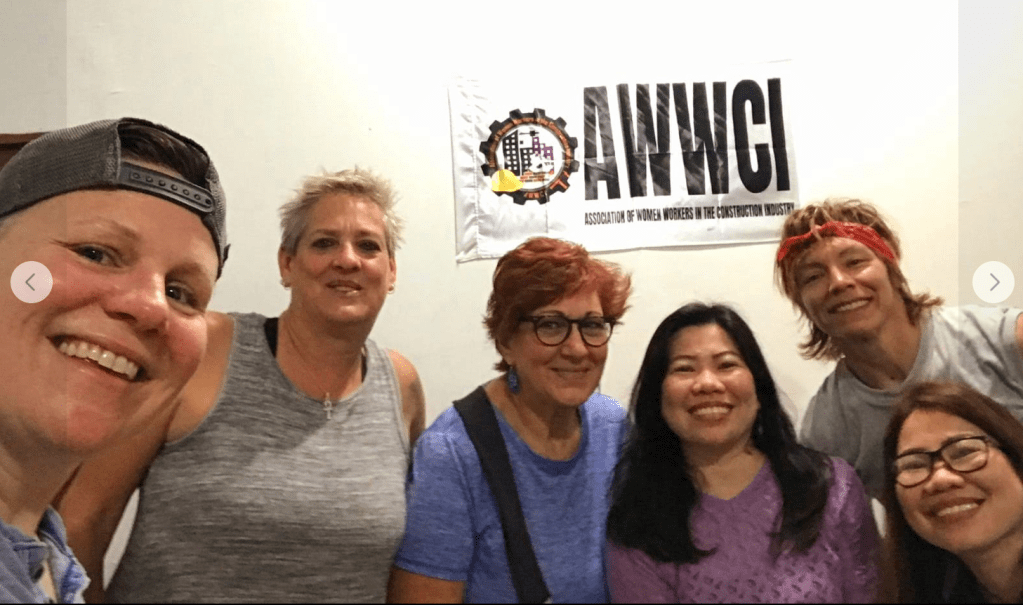
This week, TBB brought 12 delegates to Manila, Philippines for a training exchange. We provided carpentry and plumbing skills training to our Filapina sisters and they are providing training in community organizing. This is the furthest from North America that our organization has ever traveled. What attracted us to this location is the incredible work of the Association of Women Workers in the Construction Industry (AWWCI).

AWWCI was formally established in 2004. It is composed of skilled women workers e.g. painters, carpenters, masonries, and welders from different parts of National Capital Region (NCR), Caloocan, Manila, Taguig, Mandaluyong, Quezon City and nearby Bulacan.

The group aims to recognize and empower all women workers in the construction industry while raising awareness. They promote and defend workers’ dignity, respect for human rights, general welfare, security, and well being of workers. AWWCI develops skills training and recognizes women’s participation in the field of construction through social protection, social justice, equality and gender perspective. They promote and defend workers’ rights, especially the rights to self-organization and collective bargaining. 

Many of the issues that are prevalent in the construction industry of the United States and Canada are prevalent in the Philippines. Women here deal with discriminatory practices regarding employment and benefits while constantly coming up against the “macho” culture on the jobsite. Women are often put in a more vulnerable position due to limited access to resources for building up working womens’ needs and welfare, the stereotype of women’s work in the home, lack of opportunity (specifically skills training in the construction trades), lack of political participation within their unions, and the disproportionate effect of the pandemic on working women’s ability to participate in the workforce during covid.

To address these issues, AWWCI offers gender sensitivity training, organizer training, leadership training, train-the-trainer training, facilitator training, health and safety training, advocacy and campaign training, as well as legal services. 

The organization was behind successful policy changes in the Philippines that greatly impacted women workers. This included the Expanded Maternity Leave Law, Safe Spaces Law, Reproductive Health Law, the Anti-Discrimination Law, the Anti Violence Against Women and their Children Act of 2004, the Philippines Magna Carta for Women and the Magna Carta for the informal sector.

AWWCI is currently working on a global campaign to end gender based violence inside and outside of the workplace, as well as a campaign around the Philipino war on drugs and the negative impact it has had on women. 

They helped push the Philippines to sign onto the The International Labour Organization’s (ILO) Convention 190, also known as the Violence and Harassment Convention, which is the first global treaty to end violence and harassment in the workplace.

For the next three days, AWWCI will provide our North American delegates with community organizing training at their Office in Quezon City. Advocates will be presenting on topics such as leadership, community organizing, workers rights based on international law, unionism, coalition work, and gender roles. The hope is that our delegates will leave feeling inspired, and bring home the lessons they learn so that they can make a difference in their communities.

For more information on AWWCI, you can follow them on Facebook here: https://www.facebook.com/WomenInConst 

Posted in Uncategorized | Tagged , , , , , , , , | Leave a comment

Delegate Reflections: A Taste of Home: Exploring Filipino Culture Through Food

By Diana Limon and Myra Hildreth
IBEW Local Union 11

I (Myra) was excited to learn that Tradeswomen Building Bridges was sending delegates to the
Philippines. I was even more excited to find out I had been invited and would represent IBEW
Local 11 as a delegate. Because of our Local Union, I could participate in a learning exchange
with my Filipino sisters.


Growing up in the Philippines is the same as everywhere else. It just depends on your family.
But mainly, we have strong family ties. People are willing to share what they have, even if they
don’t have that much. For many people, growing up in the Philippines means the possibility of
being exposed to both poverty and wealth at the same time. I migrated to the USA at 18 through
my father’s petition. I started my electrical apprenticeship at the age of 20 and finished as a
Journeyman Inside Wireman Electrician at the age of 25. Returning to the Philippines can feel
sentimental, exciting and overwhelming.


We (Diana/me and Myra) arrived at the airport at 4:45 a.m. on a Saturday to a fairly empty
airport which was no indication of what we were to find outside the airport. Myra’s family
greeted us with a 12-passenger van which was the beginning of a culinary festival for the
weekend. As we drove to her cousin’s storefront in Cabanatuan City, we saw rice fields and
kalabaw (water buffalos). Upon arrival, we were greeted with lunch which consisted of lechon
kawali (pork), hipon sinigang (shrimp soup), white rice, and Mang Tomas sauce. Several bottles
of Coca Cola and pineapple juice with ice sat on the large communal table. The family bond
was present through the shared experience of food together.

After lunch, we drove to a nearby resort with the family and more food arrived. There were
humungous plates of pancit bihon (glass noodles) and spaghetti, enough to serve at least 30
people. After a 15-hour flight, we crashed early only to learn that more food had arrived as we
slept. The delivered food included the local delicacy of longganisa (pork sausage with garlic).
There was also fried egg plant, okra and Mary Grace mamon bread for dessert, which we both
didn’t even try from being so full and asleep. Myra managed to wake up at 2:30 a.m. to try the
longganisa!

The next morning, we checked out and went back to her cousin’s storefront for a breakfast feast
of leftover longganisa and pork adobo with hard-boiled eggs. We then headed back to Quezon
City to meet with TBB delegates for dinner at Gubat QC restaurant. At Gubat, we ate on banana
leaves with no utensils and with our hands. I had the Hipon (shrimp) with white rice, and Myra
had fried chicken with rice.

Every single day thus far, has been filled with more adventurous food choices. The logistics
team had the challenge of finding lunch on day 1 for 35 people. We crossed the street from the
training center and found local food stands. We decided on Angel’s Big Tummy and gave
everyone two choices between beef nilaga (beef soup), chicken curry, chicken adobo, monggo
soup, and laing (creamy vegetable). As is typical in Manila, all the plates come with white rice
as a main staple. We patiently waited for two hours for our 35-plate lunches. While we waited,
we bought and tried 3 medium-sized pineapples from a local cart vendor.

On day 4, we became riskier by trying street food with the traditional fried kwek kwek (quail
eggs) and fish balls with vinegar. We ate some and shared some with TBB delegates and
eventually had to go back on a paint pick up run and stopped for more fishballs! We also had
lakatan (small bananas) for snacks. On the last day of skills training with the Filipinas, one
member brought Myra the best pancit and palabok (peanut sauce noodle with egg and crushed
peanuts). While we are halfway through our trip, we are determined to try the best of Manila
food before we leave. The Filipino culture and pride is without a doubt represented in their food!

Posted in Uncategorized | Tagged , , | Leave a comment

Philippines Skills Training: The Conclusion

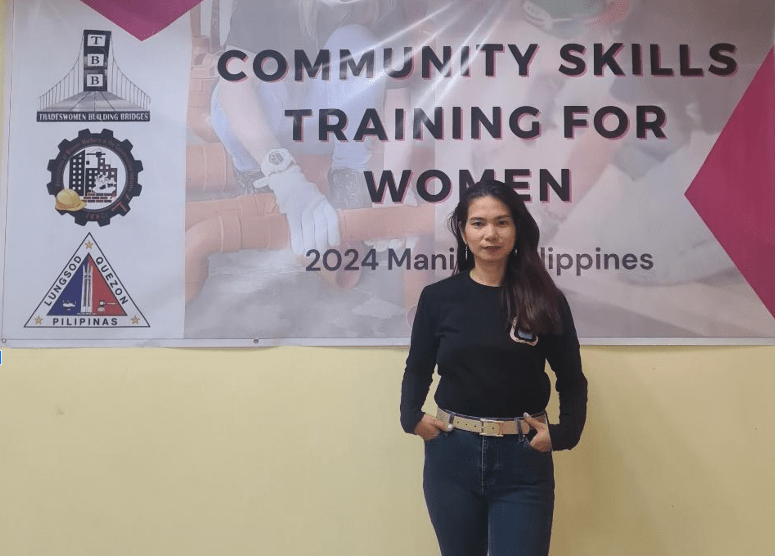
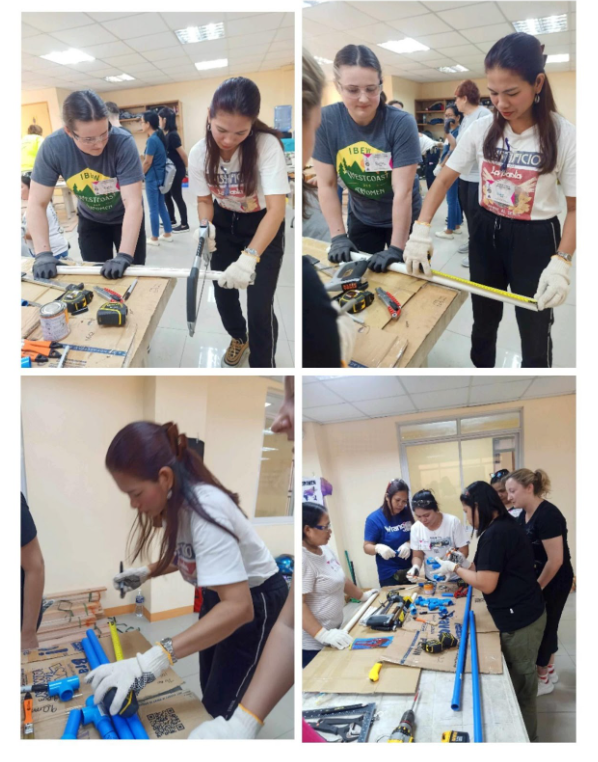
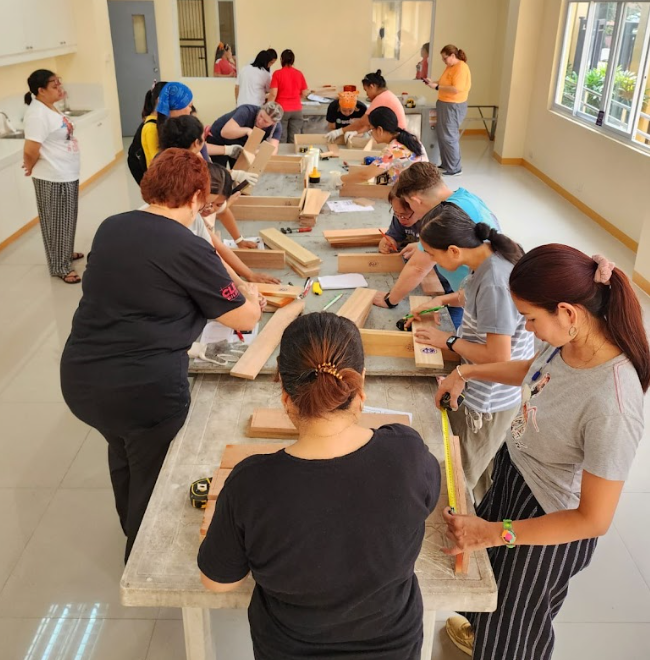
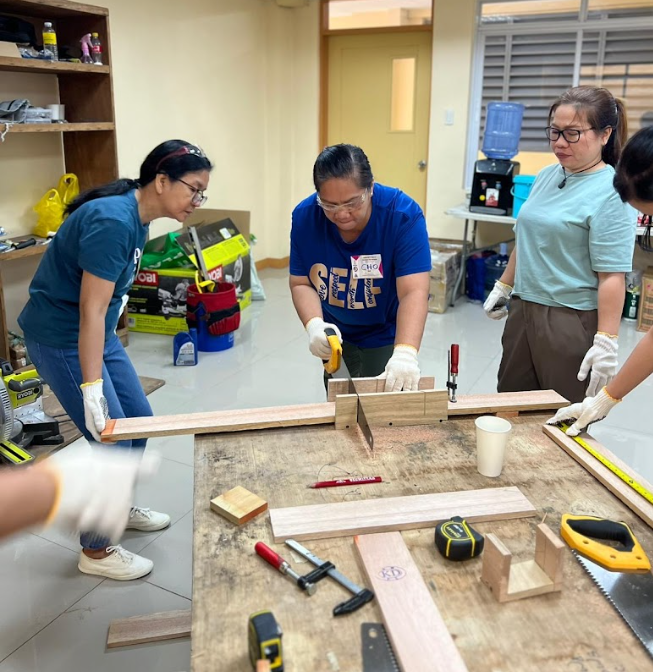
Today marked the conclusion of our weeklong community skills training in Quezon City. Our instructors Doreen Cannon and Kristine Byers developed the curriculum and provided instruction around basic plumbing and carpentry skills.

The other delegates provided support during the hands-on learning experience. 

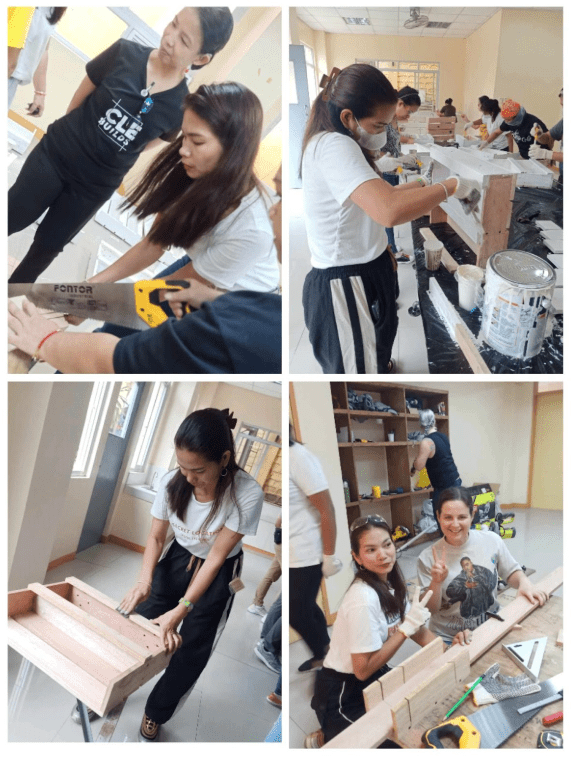
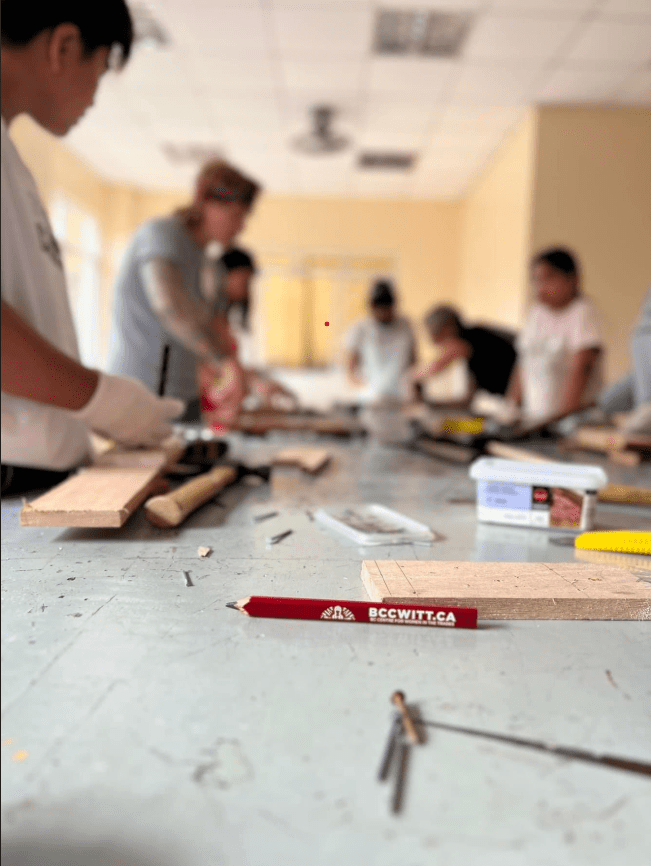
Over the past few days, participants built a bathroom shelf with a towel rack as a way to practice what they learned. These ladies demonstrated measuring and marking skills. They were able to practice cutting, clamping, layout, alignment, fastening and use of basic hand tools.

The towel rack on the bottom of the project provided them with an opportunity to practice finding pitch on pipes, using nuts and bolts, as well as working with threaded pipe connections.

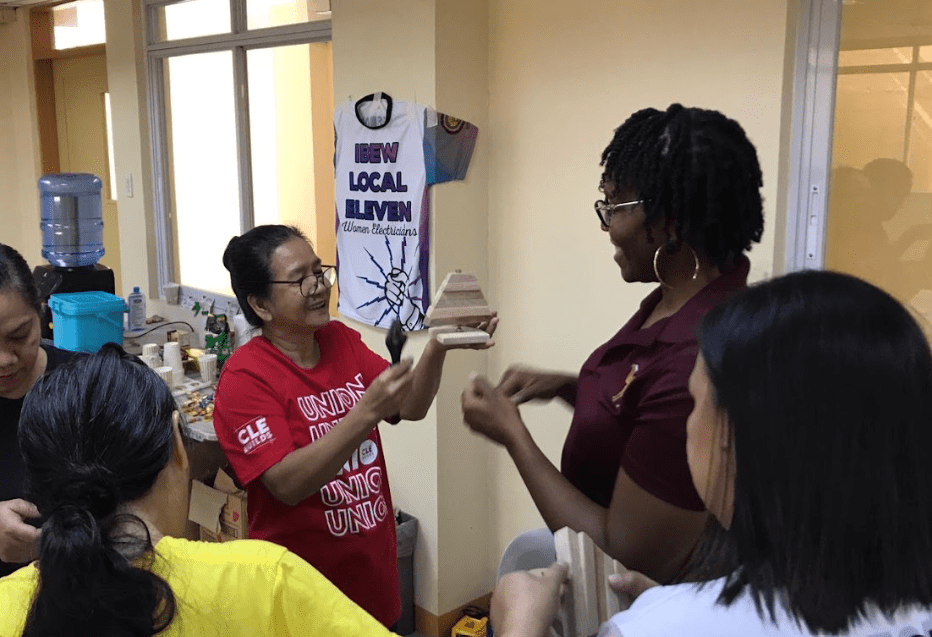
Students also painted their projects and created crafts using scrap wood.

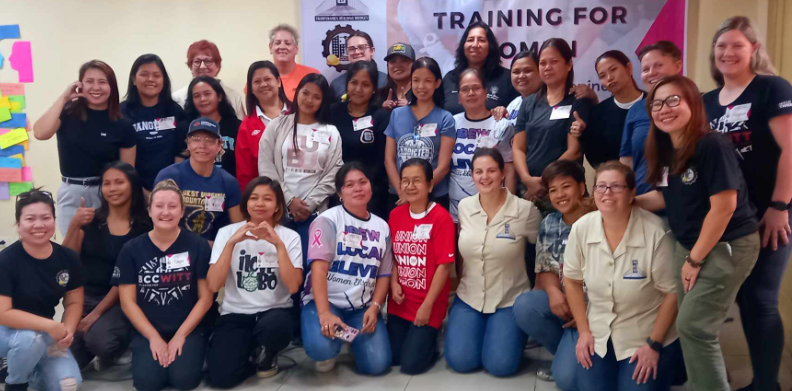
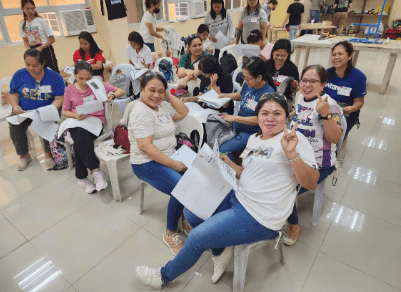
We finished the training with a group reflection. Many of the ladies expressed excitement about what they learned, and a boost to their self-confidence. 

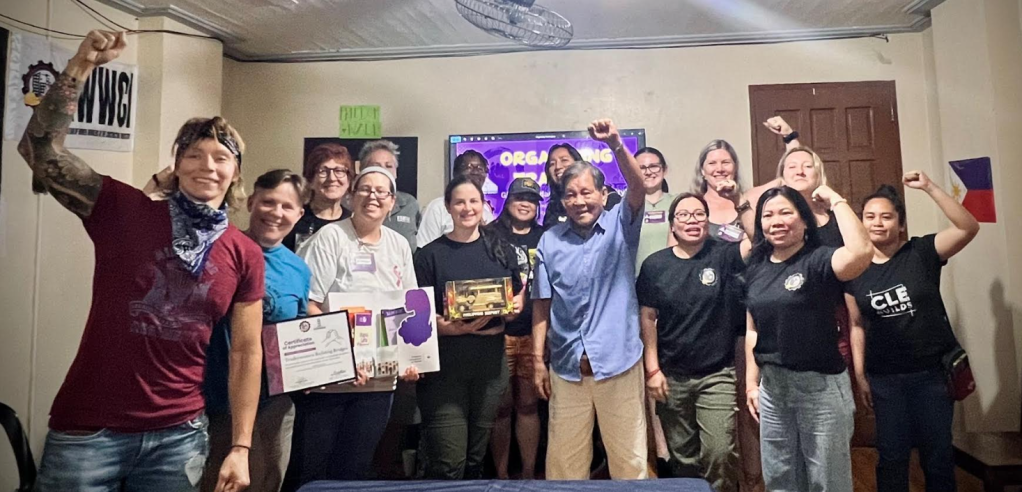
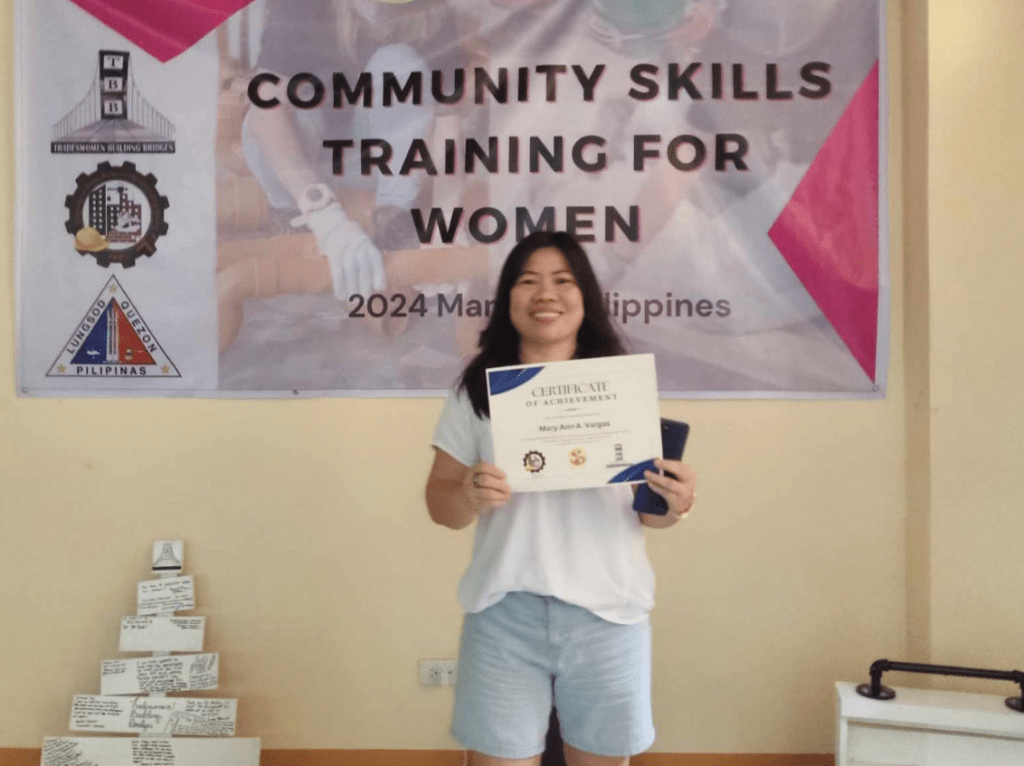
We finished the training with a graduation ceremony and celebration. Next week the delegates will be shifting from teacher to student as we begin to learn about the community and gain organizing skills.

Posted in Uncategorized | 3 Comments

Delegate Reflections: My Return to the Philippines

By Lori Griffith

Before Mt Pinatubo erupted in 1991, Clark Airbase in Pampanga was my home for 2 years. Of all my assignments in the Air Force, this was by far my favorite. 

When I learned that TBB was sending delegates to the Philippines, I was very excited and put my application in right away. I was beyond thrilled to be asked to join the delegation. 

My memories of my time in the Philippines are some of my fondest. And the food is so delicious. 

I remember the Filipinos as the kindest, most generous, hardest working people I have ever met. That has not changed. Everyone I have met on this trip still shows these same qualities. And the food is still delicious !

While the people have not changed, some things definitely have. All for the better.

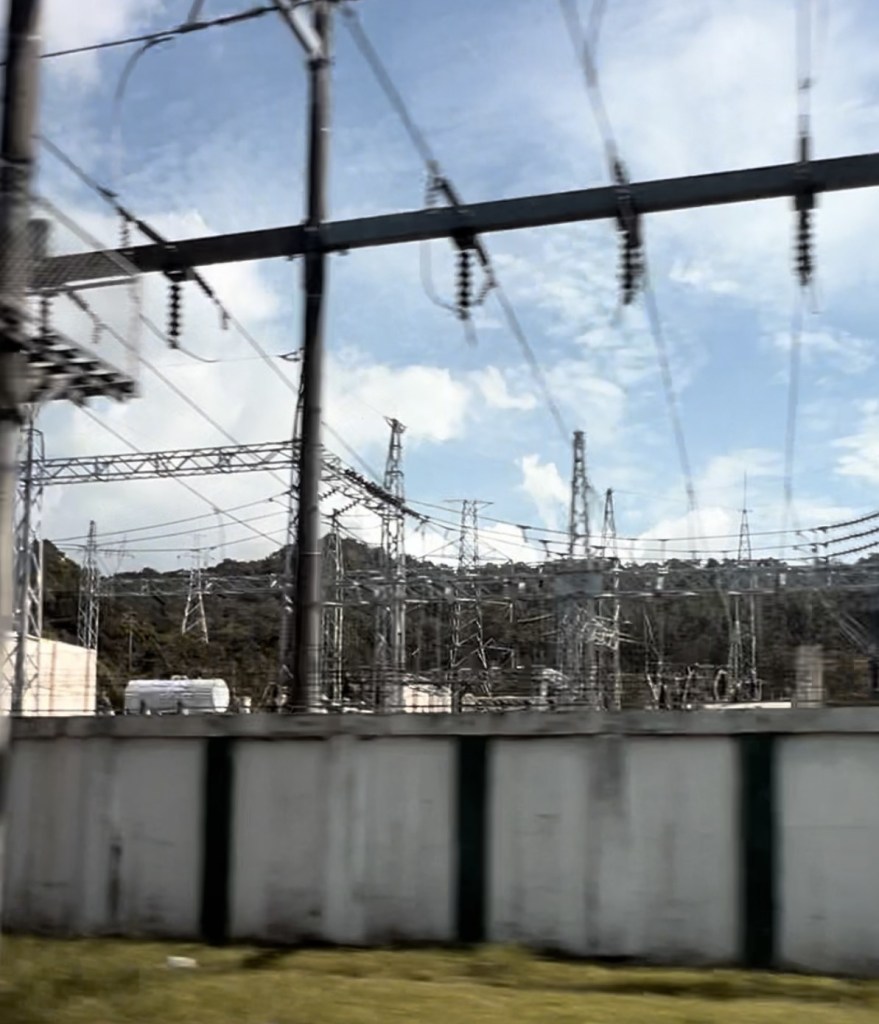
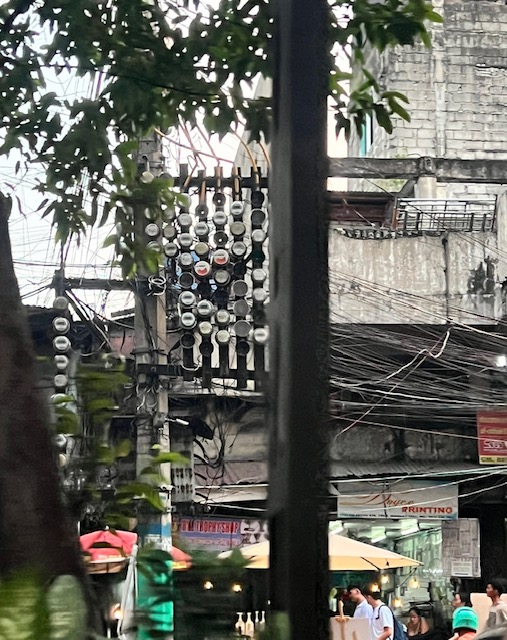
It’s nice to have reliable electricity. There were many ‘brown outs’ when I was here before. They have upgraded their power grid so there is consistent power to remote places.

With more electricity you have more water treatment plants, more refrigeration and more air conditioning.

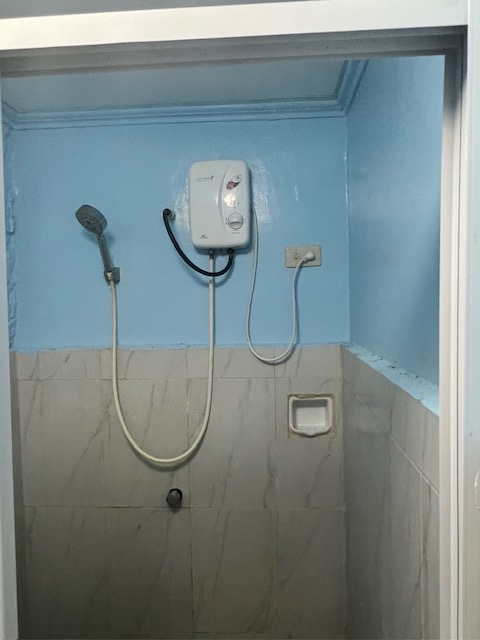
When I was here before, rarely did we get cold drinks. We hardly ever had fresh water on ice but now it is plentiful. And you can buy ice cream at the sari-sari stores! There is also enough reliable electricity for water heaters in the showers.

A shower at my hotel equipped with an on-demand water heater. We always had hot showers this time around!

And I am very thankful that they have enough power now to run the air con. It’s hot here!

I have enjoyed this trip down memory lane and am thankful to TBB and IBEW local 481 for allowing me this opportunity!

I am thankful to be able to give back to the people that were so kind to me when I was stationed here.

Posted in Uncategorized | 1 Comment

Delegate Reflections: Shopping for tools in Quezon City Extravaganza!

By Casey Aelbers & Rachel Cloutier

The Philippines is a place where one can walk off a busy street in Manila and end up in an alleyway full of hundreds of small family owned and operated stores that sell just about anything you could ever want or need. 

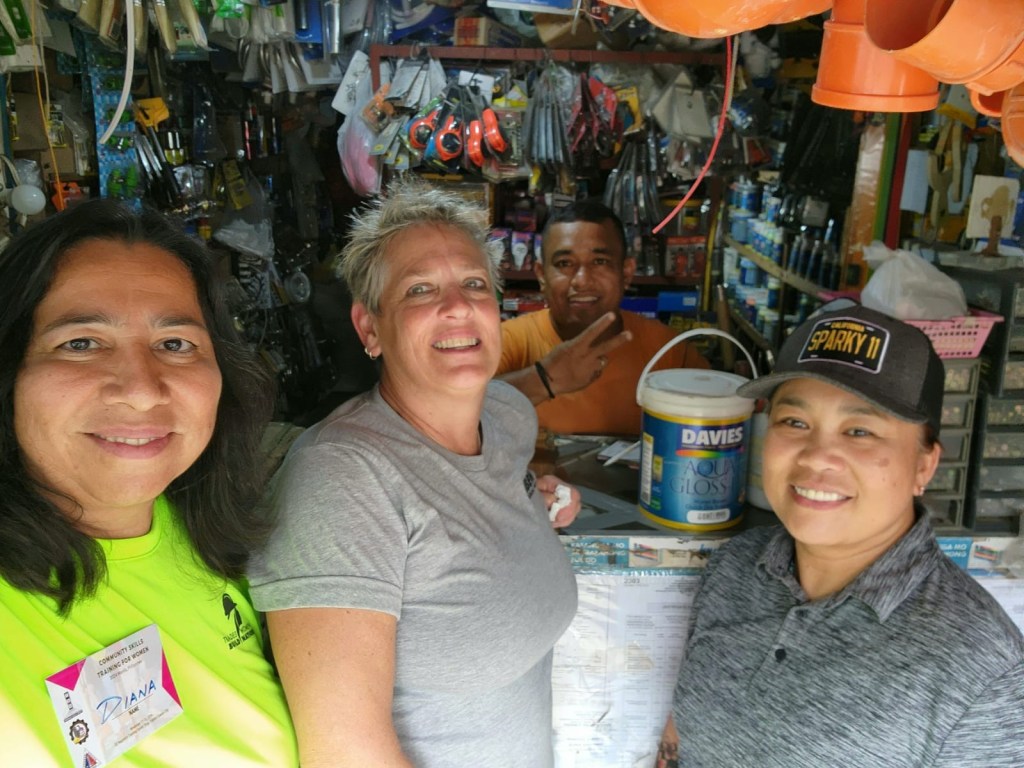
Being a group of tradeswomen who embarked on a Delegation in Quezon City to teach basic carpentry and plumbing skills, unable to bring much for material from our former countries, we were faced with the overwhelmingly and exciting task of collecting everything we would need to host a trade skills learning week upon arrival in Quezon City. 

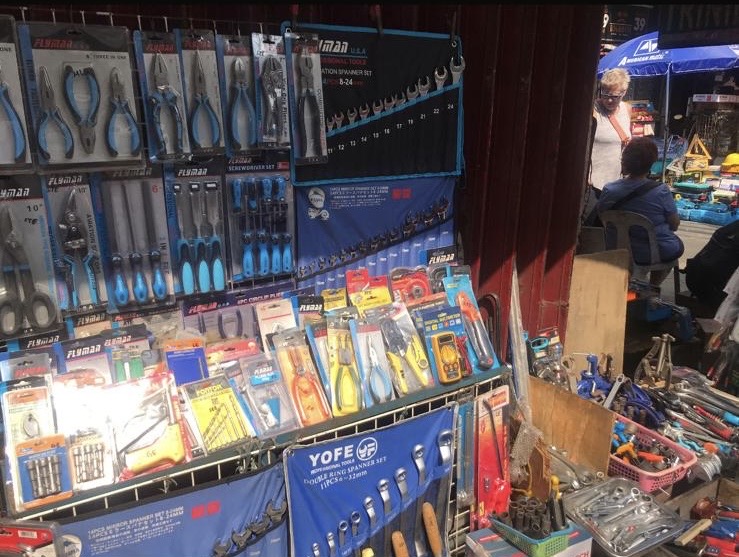
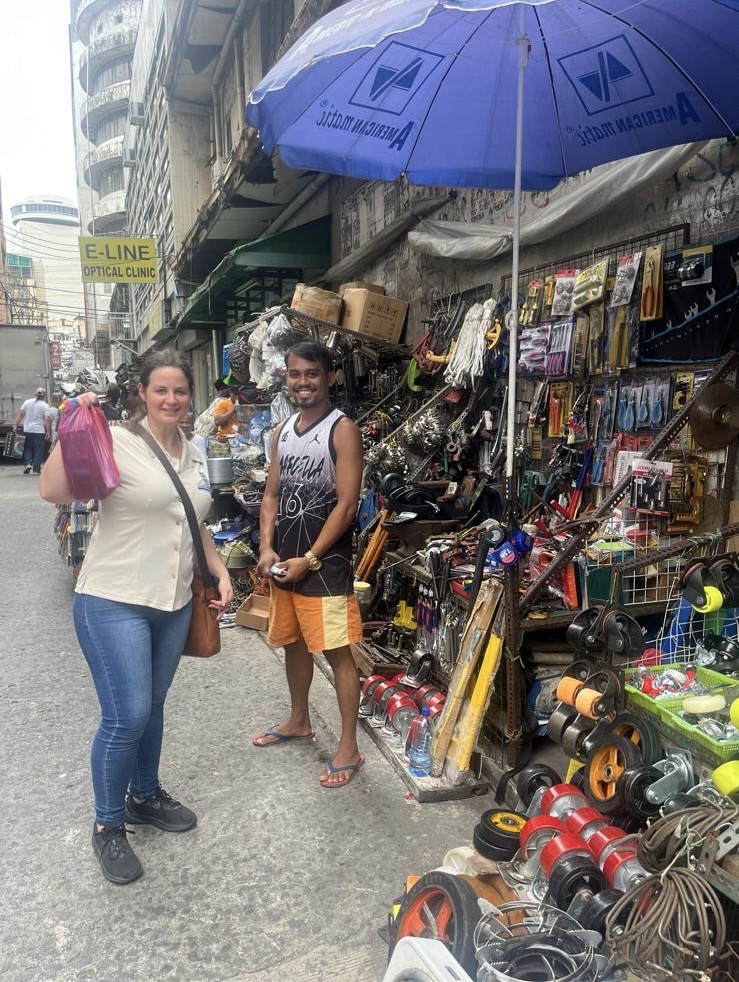
The first adventure to the markets were experienced by a small group of our delegation who were fortunate to meet a local guy named Nicko. His family owns a small store front along the street in Raon Shopping Centre. The shopping centre is huge! On the first street that the jeepney drops you off, you will find a row of electronic and stereo repair stops. Loose wires, cables and speakers hanging off ceilings on in display in every angle. As you make your way down the street, the shops appear to be selling more items used for electrical construction, like wire strippers, conduit benders, and a variety of hand tools. Eventually you end up at a fork and there is Nickos’ families stand. Smiley young 28 year old filipino guy with blonde frosted hair and looking eager to help a bunch of lost looking foreigners. 

On our return to the Raon Shopping Centre, Lori, Cassy, Rachel and myself (Casey) find ourselves lost on this street, bargaining for speeds quares, 1/4 inch drill bits, and on the hunt for wood screws. Lori who has already been to Raon Street knows the way. She recognizes the shop that offered the first group a terrible price on some C- clamps, and so we carry on. We finally find a young guy, not Nicko, but at the same time very eager to help us! We show him some pictures off our phones of the items we are looking for. He starts pulling drill bits out of corners of his store, brings us box cutting knife blades and philips heads driver bits. When we tell him we need a couple speed squares, he takes one look at the picture on my phone, says he will be right back and takes off into the abyss of crowds, cats and vendors. After around 10 minutes he comes running back, panting and out of breath, carrying two brand new speed squares in a plastic bag. Clearly he has gone above and beyond for us, bargained for them with another local vendor to resell them to us at a different price. Perfect! We take what we can find and get going. 

Out of pure luck, Lori spots Nicko’s stall, and we run over and ask his family if Nicko is around. Same spot, same blonde hair and big glasses. He remembers her instantly when he arrives and insists on taking us to Screw Street. 

A few long alley ways, past a couple cats and rats along the way, and a lot of attention on Nicko from all the locals as he leads four foreign women through the back streets to screw street, we finally make it!  Unfortunately we quickly learn that this street closes from 12:30 to 1:30 for families to enjoy lunch. We almost turn around and head back, but not before an older gentleman waves us over from down the street and tells us that his stomach is rumbling but he will fulfill our order of 600 finishing nails, 160 bolts, washers and 300 wood screws. We hand him over the cash and get out of there. 

We hop in a taxi, fight the Quezon City traffic back to the training centre, and get back just in time for our own lunch, which has been sitting on the counter for an hour but still tastes pretty good! 

Posted in Uncategorized | Tagged , , , , , , | 1 Comment